




The Biggest Content Marketing Challenges Businesses Face and How to Overcome Them
Content marketing has become one of the most effective ways for businesses to build authority, increase visibility, and generate long-term organic traffic. But many businesses struggle to create content that consistently performs. From understanding search intent to maintaining a publishing schedule, content marketing can feel overwhelming without a clear strategy.
This article explores the most common challenges businesses face with content marketing and how to solve them using practical, experience-driven strategies.
1. Understanding What Your Audience Actually Wants
One of the biggest challenges businesses face is creating content without truly understanding what their audience is searching for. This is not about knowing that your audience can use your product or service—that’s a given. Understanding what your audience actually wants is knowing what they search for when they look for the product or service being offered. Many companies publish articles based on assumptions instead of real search behavior.
The key to solving this problem is understanding search intent. Search intent refers to the reason behind a user’s search query. Are they looking for information? Comparing services? Ready to buy?
Creating a service page around a search query that people use to gather information is an example of not meeting search intent.
Using tools such as Google Analytics and keyword research platforms can help businesses identify the exact terms people use when finding their website. Once those patterns become visible, content can be created around real audience interests instead of guesses.
So aligning your content marketing with search intent will create stronger engagement, and better organic rankings over time.
2. Staying Consistent Without Sacrificing Quality
Consistency is another major challenge in content marketing. Many businesses start publishing content on their website but eventually stop because content creation becomes too time consuming and difficult to maintain. This is why businesses end up investing in professional content marketing service. There is just too much to know about content, and even more that needs to be done to successfully generate leads from content.
Content is the number one commodity that both AI and search engines use to connect users with information and services. However, there are millions of pages for any given search, and only a handful that appear on the first page. Therefore, publishing low-quality articles simply to meet a schedule is not a good content marketing strategy. For content to rank, it needs to be original, helpful, and optimized around clear user intent.
- Low-quality content is content that is entirely AI-generated, without any authentic insights based on experience, depth, or research
- High-quality content is content that derives from the real experience of the person reading it, and fleshes out the topic
Create a content calendar and view content with high respect. The content calendar will help you publish content consistently; moreover, a respect for content is also a respect for your audience. People use content to make decisions about your business, so being accountable for the quality of your content marketing will help your business grow.
3. Getting Traffic but No Leads
One of the most frustrating challenges of content marketing is when content brings traffic but no leads. People are visiting the website, but nobody is calling, booking, or filling out a form. If this is happening you need to ask yourself: is there a clear path guiding those visitors toward taking action? Is your landing page too cluttered and hard to understand? Is your copywriting persuasive? A few things that can solve this issue include:
- Doing Search Engine Optimization properly
- Rewriting your headlines to lead with the customer’s problem
- Adding a clear call-to-action to every page — call, book, or fill out a form.
- Linking every blog article to a relevant service page so informational traffic has somewhere to go
- Providing real reviews and testimonials near your call-to-action to build trust at the decision point
- Replacing “we” language with “you” language throughout your pages.
- Making sure pages are clean and provide transactional opportunities in the beginning, middle, and end.
4. Measuring Whether Content is Actually Working
Measuring Whether Content Is Actually Working is probably the hardest thing for a business owner to know. Firstly because the many agencies who they hire don’t do a good job of explaining the process and keeping them updated, and secondly because many professionals themselves don’t know how to measure whether content is actually working.
It’s actually quite simple and you can know by viewing these three metrics:
- Indexed Pages: The number of pages Google accepts into its data base
- Search Impressions: What keywords each page shows up for
- Organic Search Traffic, or ‘clicks’: How many people are actually clicking on the pages that show up
All three can be tracked on Google Search Console.
Indexed Pages
Indexed pages are the number of pages Google has crawled (discovered) and indexed (accepted into search database). It is the first step to knowing if content marketing is working because without indexed pages, content is not discoverable, and cannot generate traffic.
The number of indexed pages should increase as more content is published, if not, then it means something is keeping search engines from ranking content.
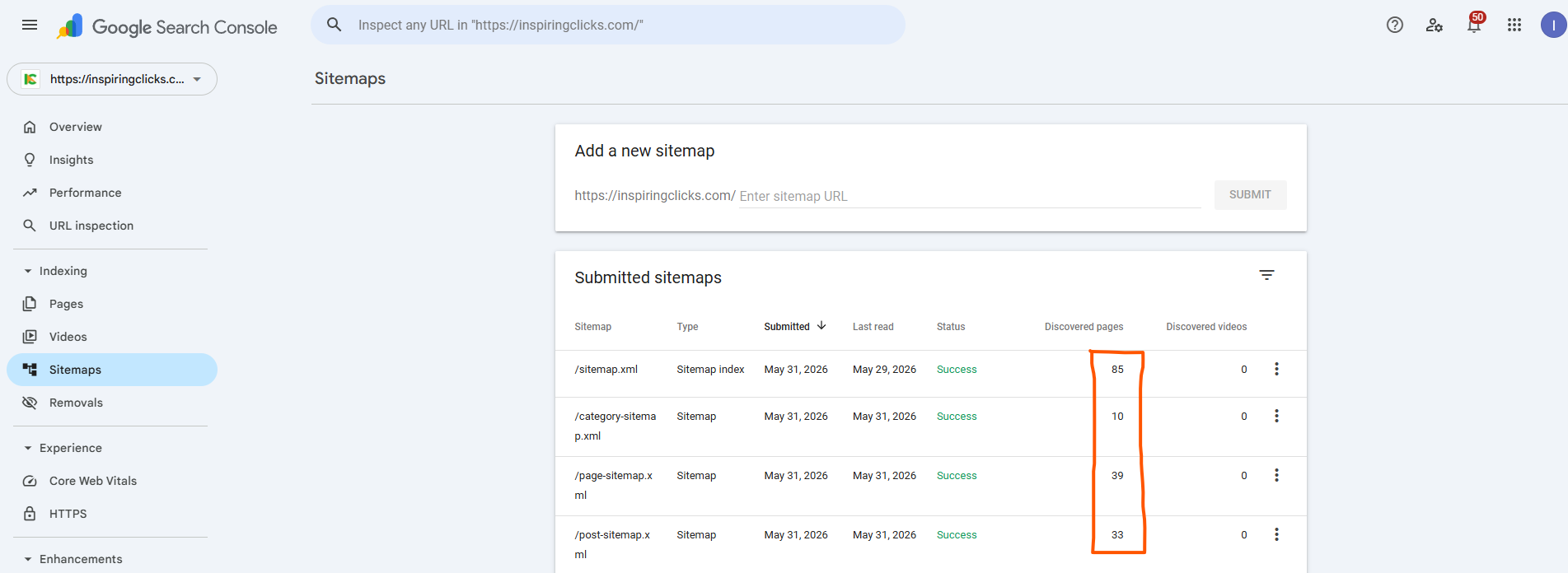
A good way to track indexed pages is to submit sitemaps into Google search. Above is a photo of sitemaps shown in Google Search Console. Adding sitemaps helps Google discover the pages, posts, and categories that exist on your website. As Google crawls these sitemaps, it shows how much of your content is being found and processed by Google’s search engine, giving you a clearer picture of whether content marketing is working
Search Impressions
Search impressions are the keywords that pages are showing up for on Google search. They come after pages are indexed on Google, and they reveal two things:
- Verify whether content is showing up when people search
- Show which keywords the content is showing up for.
Google Search Console will show a list of keywords that your website is showing up for under ‘queries’. This is essentially what Google believes your content is about. Therefore, it helps validate your content and optimization efforts.
For example, if you wanted to show up for commercial terms but end up showing for informational queries, then this is a sign that you should review your content strategy, search intent, and optimization efforts to better align with your business goals.
Organic Search Traffic
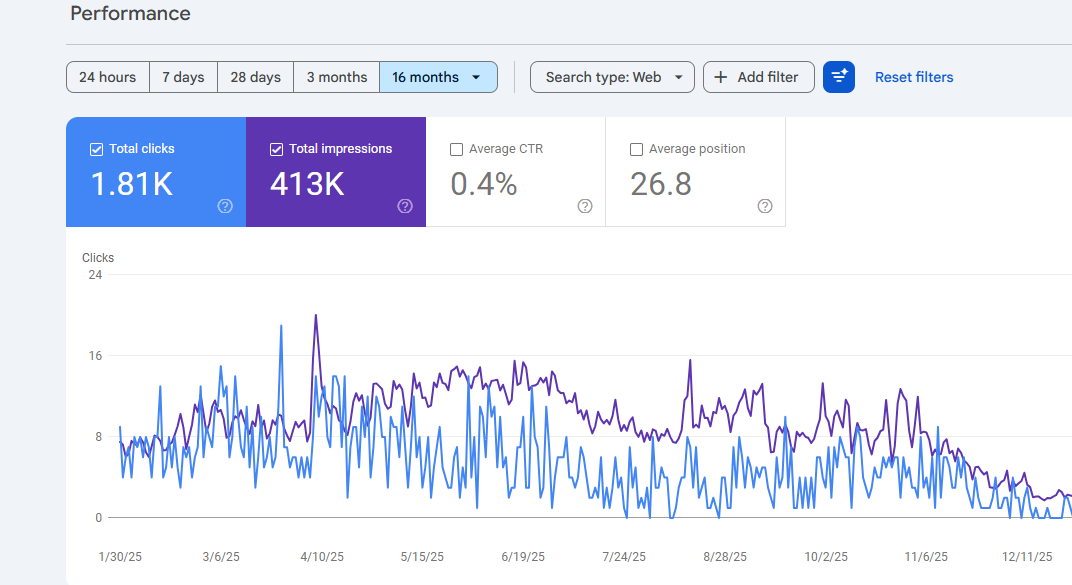
After impressions comes clicks, which is the ultimate validation that your content marketing is working. Clicks show that people are visiting the content that is appearing on search engines. Considering that 96% of all clicks happen on the first page of Google, this metric is a clear indicator of first page ranking.
The most important thing after clicks is conversion rate — which is essentially how many clicks turn into clients.
- Organic pages
- Organic Impressions
- Organic traffic
- Conversions
The Best Piece of Advice For Overcoming Content Marketing Difficulties
Content marketing is not inherently difficult, it just takes time, effort, and experience. As a business you may have all three; however, you use them to run your business. Running your marketing at the same time is overwhelming. But there are people out there who use their time, effort and experiences for marketing, because marketing is their business. If you need help with your content and would like content to start performing for you, click the button below to see how our content marketing services can get you better ranking and more leads.