



What is a Brand?
In the past, a brand was described as a mark owners would burn onto their cattle so that others could identify who they belonged to. Today, a brand is more than a mark of ownership, it is an image, a narrative, and a story that is built to shape the perception people have about a business, and ultimately inspire their decision to choose one product or service over another.
This is good news for businesses, because it means that understanding what a brand actually is could be the key to more revenue, especially with the right branding strategy.
If you’re interested in capturing more customers through branding, it’s important to understand that the ‘burn’ of a brand is no longer a physical one, but a psychological one that consists of:
- Thoughts – what people think
- Emotions – what people feel
- Behaviors – what people do
When enough people have consistent thoughts, emotions, and behaviors toward a business, then that becomes the brand of the business.
A business can effectively ‘burn’ thoughts into the minds of people through marketing. This helps change emotions, and emotions are responsible for how people behave toward a business—whether they purchase or not. A business does this by:
- Story – The events, facts, and history that explain what happened, what is happening, or what will happen
- Narrative – The meaning and perspective that shapes how the story is told
- Experience –The real-world interactions and feelings people have with it
When a business consistently reveals a story, narrative, and an experience, then that becomes the brand a business wants.
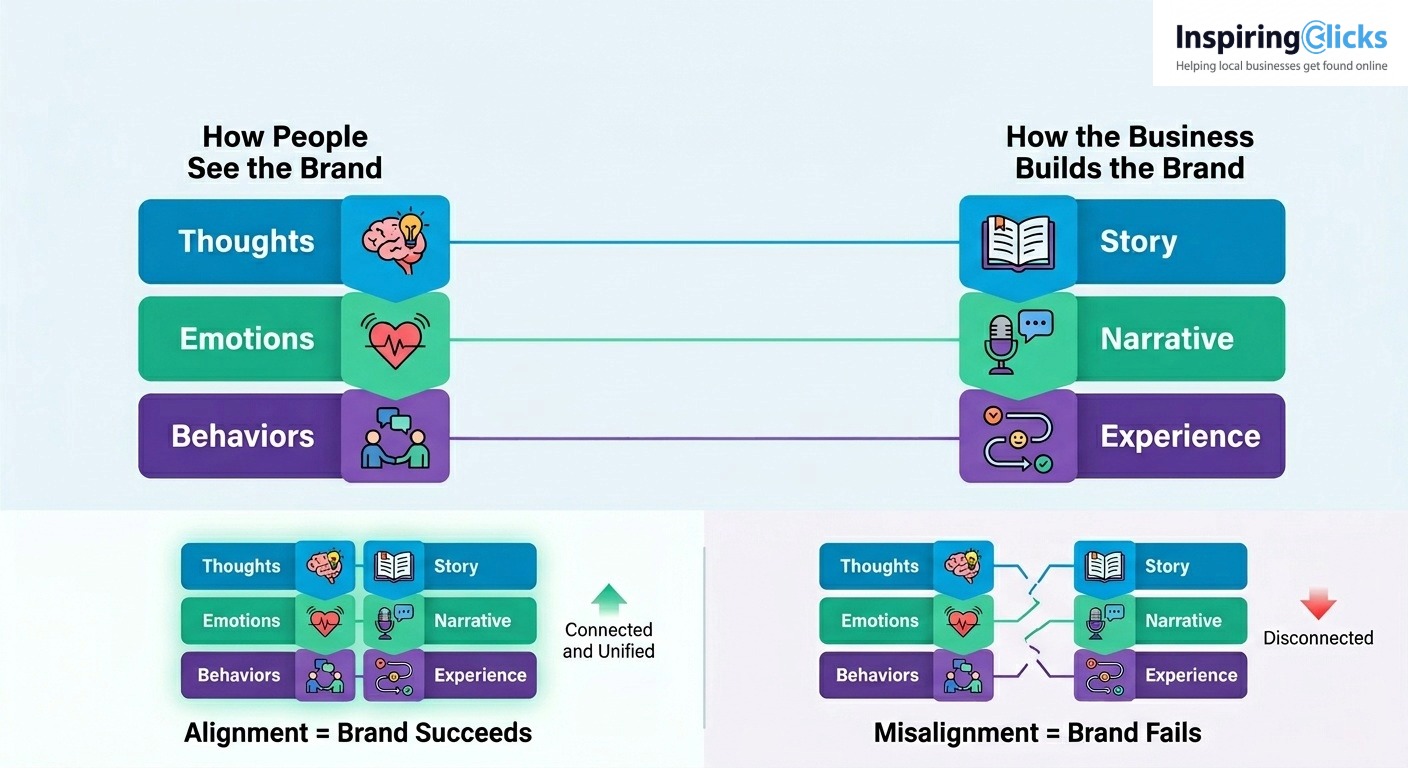
A brand is not a logo, color palette, or motto, just as much as a person is not their face, color of skin, or name. These physical factors are responsible for identifying the brand, or person, but the thing that causes consumers to transact with a brand is the result of thoughts, emotions, and behaviors. These three are influenced by story, narrative, and experience.
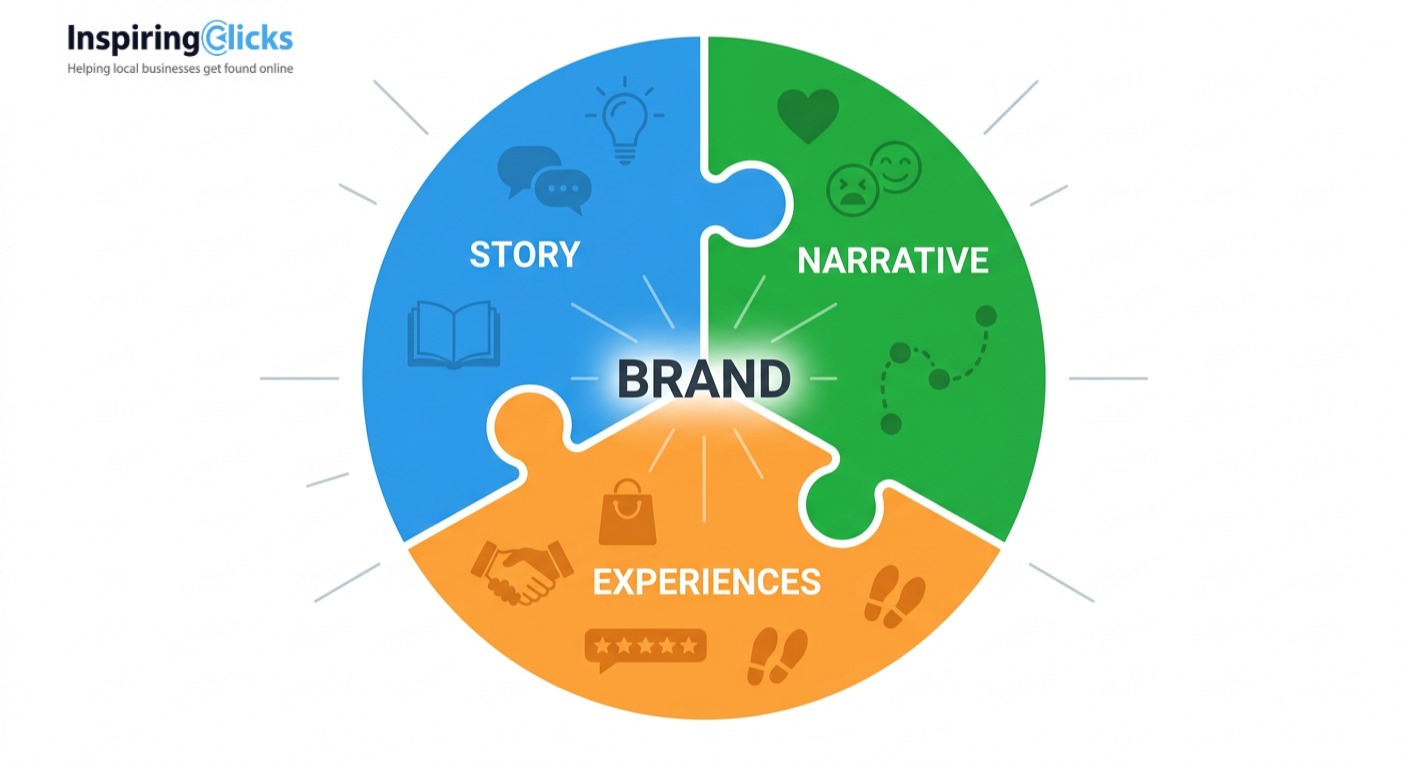
In this article, we’ll take a pragmatic approach to help you understand what a brand is by starting with the three major parts of a brand:
- Story: Influences the thoughts people have about a business
- Narrative: Influences the emotions people have about a business
- Experience: Inspires the behavior of people toward a business
Brand Story
A brand story is an account of the past, present, and future of a business that is told to create a connection with its audience. It is the first part of a brand because every business has a beginning, a present, and a direction, and by choosing to tell that story, you ground the business in what it stands for, what it pursues, and how it should act based on its values.
People resonate with stories. They always have. In fact, people have their own stories to tell, and when a business shares its story, it reveals the connections between what the business has been through and what the audience has been through. That is the essence of connection. According to research by Headstream, 68% of consumers say that brand stories directly influence their purchasing decisions, which means more than two-thirds of your potential customers are listening for a reason to choose you before they ever look at your product.
Why is a Brand Story Important?
A business without a story can still operate. It can still sell products, deliver good customer service, and make money. But a business that tells its story sets its own conditions. It defines its objectives, its values, and the thing it stands behind. It explains itself on its own terms, rather than leaving the entire explanation to be done by others.
Think about it this way: a customer who has an experience with your business already has a story to tell about it. Customer reviews are just stories written by other people. If your business does not tell its own story first, you are not absent from the conversation, you are just not the one leading it. You miss the opportunity to frame why your business exists, what it solves, and what it promises, and instead, those answers get shaped entirely by whoever decides to talk about you.
This is also why storytelling is an essential part of marketing. Without explaining your position, you are subject to being placed in a position without knowing where you are going. A brand story is not a defensive move, it is a grounding one. It gives the business and everyone connected to it, from the owner to the employees to the customers, something real to orient around.
Brand Story vs. Company History
A brand story is not the same as a company history, even though they draw from the same events. History is a set of facts. A story is the meaning behind those facts, told through the lens of the business itself.
History depends on who is narrating it. The facts may stay the same, but the journey from past to present changes based on perspective. Watching a movie based on historical events is different from watching a drama or a comedy, and there is a reason they are categorized differently. A timeline tells you what happened. A story tells you why it matters.
There is nothing wrong with putting a timeline on your About Us page. But a timeline alone does not give people a reason to care. A brand story takes those same milestones and connects them to a value, a mission, or a turning point that the audience can see themselves in. That is the difference between listing dates and building trust.
Who is a Brand Story For?
A brand story is for the customer who wants to learn, the business owner who wants to remember, and the employees who want to live by the example. It is for all of them, but depending on where you are, it functions differently.
For a customer, the story answers the question of why this business deserves their attention. For the business owner, it serves as a reminder of the original purpose when things get complicated. For employees, it becomes the standard they measure their work against. The story itself should not change based on the audience, but the values people take from it will naturally shift depending on their relationship to the business.
When Does a Brand Story Start?
A brand story starts the second you decide to put it on the page. Every business has a history from the moment it opens its doors, but the story does not exist until someone chooses to tell it. Your About Us section is not just a formality. It is the first place most people go to understand who you are and why you do what you do. Treat it accordingly.
Can a Brand Story Be Too Honest?
Even if a business started purely for money, it required something of value to make that money in the first place. You do not earn revenue without solving a problem or delivering a service that people need. If the honest truth is that great customer service is what keeps your customers coming back, then that is your value. Hold true to it. Good customer service is a real and meaningful thing to stand behind, and so is the ambition to build something profitable. A brand story does not need a noble origin myth. It needs the truth about what the business actually values, and the discipline to stand by it.
Brand Narrative
A brand narrative is the collection of stories, experiences, and perceptions that build around a brand over time. Unlike a brand story, which is created and controlled by the business, a brand narrative never ends. It is shaped continuously by what the business says about itself and what others experience and share.
A brand story is what is said once. A brand narrative is what people experience repeatedly.
Every interaction adds to the narrative. Customer reviews, marketing campaigns, content, and real-world experiences all contribute to how a brand is understood. While a business controls its story, the narrative is built through both delivery and perception over time.
Brand Story vs Brand Narrative: What’s the Difference?
The brand story and brand narrative are both essential parts of a brand, but they serve different roles.
A brand story is the foundation. It is created by the business and communicates its mission, values, and identity. This is often presented on an About Us page, giving the business a clear position and something consistent to stand behind.
A brand narrative builds on that foundation. It forms as the business delivers on its promises and people respond to those experiences. Each interaction, whether positive or negative, adds another layer to how the brand is perceived.
The person telling the story always matters. A brand story reflects the voice of the business. A customer review reflects the voice of the customer. As more of these perspectives accumulate, they create a broader understanding of the brand.
A brand narrative is not owned by a single moment or a single voice. It is built over time through:
- Customer experiences
- Reviews and testimonials
- Marketing campaigns
- Content and messaging
- Public responses and business decisions
Example of a Brand Narrative
A simple way to understand a brand narrative is through customer reviews.
A single review is a story told from one person’s perspective. It has a clear beginning, middle, and end. But as more reviews, interactions, and experiences accumulate, they begin to form a pattern. That pattern becomes the brand narrative.
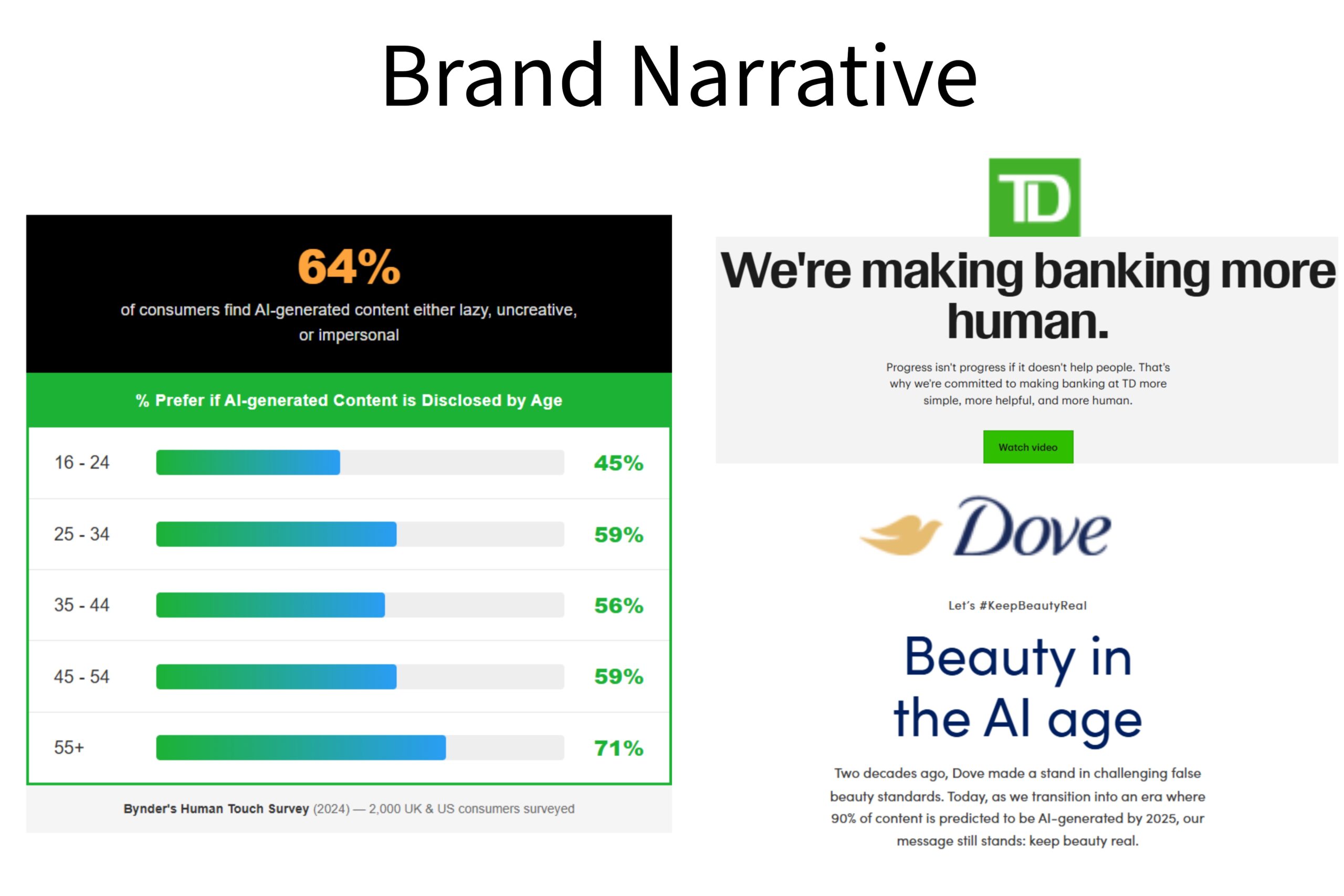
Brand narratives also evolve with society. One of the biggest shifts today is the rise of artificial intelligence and how it affects trust.
- Over 80% of consumers believe AI-generated content should be labeled
- More than 60% say transparency increases trust
Major brands are already adapting to this shift.
- TD Bank is emphasizing more human-centered messaging
- Dove is addressing beauty standards in the age of AI
These companies have not changed their core story. They are changing how that story is communicated based on what people value today.
That is the power of a brand narrative. It allows the same business, with the same foundation, to stay relevant by adapting to real experiences, expectations, and cultural shifts.
Brand Experience
Brand experience is how customers perceive and interact with a brand at every stage. It is not just about what the business says; it is how people feel and act based on their interactions. Every thought, emotion, and behavior connected to a brand contributes to the experience.
At its core, brand experience is customer experience. It shapes the perception of the brand through real-world interactions before, during, and after a purchase. A strong brand experience reinforces trust, drives loyalty, and influences behavior, while a poor experience can erode credibility and damage perception.
How Experience Shapes Thoughts, Emotions, and Behavior
Thoughts alone are fleeting, but emotions linger—and emotions drive behavior. Brand experience is the bridge between thought and action.
For example, consider the iPhone. A customer may believe the iPhone is the best phone for them. When it is time to upgrade, they feel confident and act because past experiences with the iPhone have been positive. The ease of the upgrade reflects a history of trust and reliability.
Conversely, switching to a new brand, like Samsung, introduces uncertainty. Even if the customer believes Samsung has better features, emotions like unease or apprehension may slow adoption. The behavior—whether they switch or stay—is guided less by the idea of the phone and more by their emotional history with the previous brand.
This demonstrates a critical point: thoughts can change quickly, but emotions, rooted in experience, influence behavior over the long term. Every interaction with a brand contributes to this emotional framework.
Components of Brand Experience
Brand experience is holistic. It includes everything that has happened with the brand up to this point and everything customers say about it, whether through direct stories or the broader narrative.
Key components include:
- Pre-purchase interactions: Research, advertising, website experience, and initial inquiries.
- Purchase interactions: Ease of buying, payment, onboarding, or customer support during the transaction.
- Post-purchase interactions: Product performance, service follow-up, reviews, and ongoing engagement.
Even experiences after a purchase—like a meal that causes an upset stomach—remain part of the brand experience. Every moment, positive or negative, contributes to the perception of the brand.
Who Controls Brand Experience?
A business does not have full control over how customers feel. Emotions are personal and unpredictable. However, businesses can control how they deliver experiences.
For example, a company cannot guarantee a customer will feel happy, but it can ensure the booking process is seamless, customer service is responsive, and interactions are professional. By designing each touchpoint carefully, the business manages the likelihood of positive experiences while mitigating negative ones.
Brand Experience as a Story
Every brand experience tells a story. Positive experiences create stories that encourage repeat interactions and referrals, while negative experiences generate stories that can deter potential customers.
Customer reviews are a perfect example:
- A glowing review reinforces the narrative and attracts more engagement.
- A negative review becomes part of the brand story but also serves as an opportunity for the business to show accountability and responsiveness.
Over time, these accumulated experiences shape the brand narrative, influencing what people think, feel, and ultimately how they act toward the brand.
Key Insights: What You Can Learn About a Brand
- A brand is more than a logo or a product
- It is a combination of what a business claims (brand story), how it is perceived over time (brand narrative), and how people experience it (brand experience).
- A strong brand unites these elements into a consistent identity that builds trust and loyalty.
- The brand story sets the foundation
- The story is fully controlled by the business and communicates mission, values, and purpose.
- It gives the brand a clear framework that guides interactions and expectations.
- The brand narrative evolves over time
- Narratives are shaped by both the business and the experiences of customers.
- While the story stays the same, the narrative adapts to culture, society, and current expectations.
- A brand narrative is formed by accumulated stories, reviews, campaigns, and public perceptions.
- Experience drives emotions and behavior
- Brand experience connects thoughts to emotions and then behavior. Positive experiences reinforce trust; negative experiences can undermine it.
- Experiences extend beyond purchase to pre-purchase research, post-purchase support, and ongoing interactions.
- Consistency builds trust, adaptability maintains relevance
- The story provides stability.
- The narrative and experience allow the brand to adapt to shifting expectations, cultural changes, or emerging trends like AI transparency.
- Brands are co-created by business and audience
- Businesses control their story and how they deliver experiences.
- Customers control how they perceive and communicate their experiences.
- The intersection of these perspectives forms the overall brand perception.
- Human touch remains critical in a digital world
- Authenticity, transparency, and human-led messaging stand out in an era of AI-generated content.
- Businesses that clearly demonstrate human involvement in their story and experiences earn stronger loyalty and engagement.
- Every interaction is an opportunity
- Each customer touchpoint—positive or negative—adds to the narrative and reinforces or weakens the story.
- Designing intentional experiences maximizes positive outcomes and ensures the brand is remembered the way the business intends.