


SEO Branding: How Strong Brands Turn Zero-Click Searches Into Deferred Clicks
Branding and SEO have long been treated as though they have little to do with each other; however, with the advent of AI, a brand has become one of the most important aspects of building online visibility through SEO, for reasons most people overlook.
The biggest reason is that the sheer volume of generic, scraped content has made anything genuinely distinct more valuable. Branding is simply the process of identifying what makes a business unique and expressing it to the world.
That matches the exact job of SEO: identifying search intent and expressing it through helpful content.
Search engines then complete the loop. They identify that content, express it on the results page, and give the searcher a chance to identify the brand and express interest with a click.
Roughly 68% of searches now end in zero clicks, and this means that more often than not, people will not click on a search result. At the same time, almost half of all Google searches are branded, meaning searches for specific company names, product lines, services, or trademark terms.
The internet has gone wild saying that zero-click search is hurting organic traffic, but the truth is it will only hurt those who have not worked on their brand, because the shift from traditional search to AI search simply means that people have changed the way they search, not what they search for.
Brands that have successfully established themselves as the thought leader in their area of expertise will still get visitors from zero-click searches, but those visitors simply arrive in the form of branded searches.
This makes many zero-click searches really just deferred-click searches, which is why SEO and branding have more to do with each other than ever before.
What is a deferred-click search?
A deferred-click search is a zero-click search that produces a click later, usually on a brand term. That later click is the deferred click. Someone searches for a service, sees the business in an AI Overview or a results page, and does not click. They take the name with them and search that name at a later time, thereby landing on the website without ever clicking on the term that produced the zero-click impression.
The technical side of a deferred click
In Google Search Console, a deferred click records as an impression for the original search term, and a click for the branded term that comes after.
Impressions are the number of times a website appeared in someone’s search results. Clicks are the number of times someone chose it and visited. Every click begins as an impression, but most impressions never become one, and in the case of deferred clicks there are many impressions for every single click, because the impression and the click happen on two different searches.
This is visible in the Search Console account for our own SEO agency. Over three months in 2026, branded searches like “inspiringclicks” and the co-founder’s name, Adam Hamadiya, appeared among the top queries alongside five different service searches.
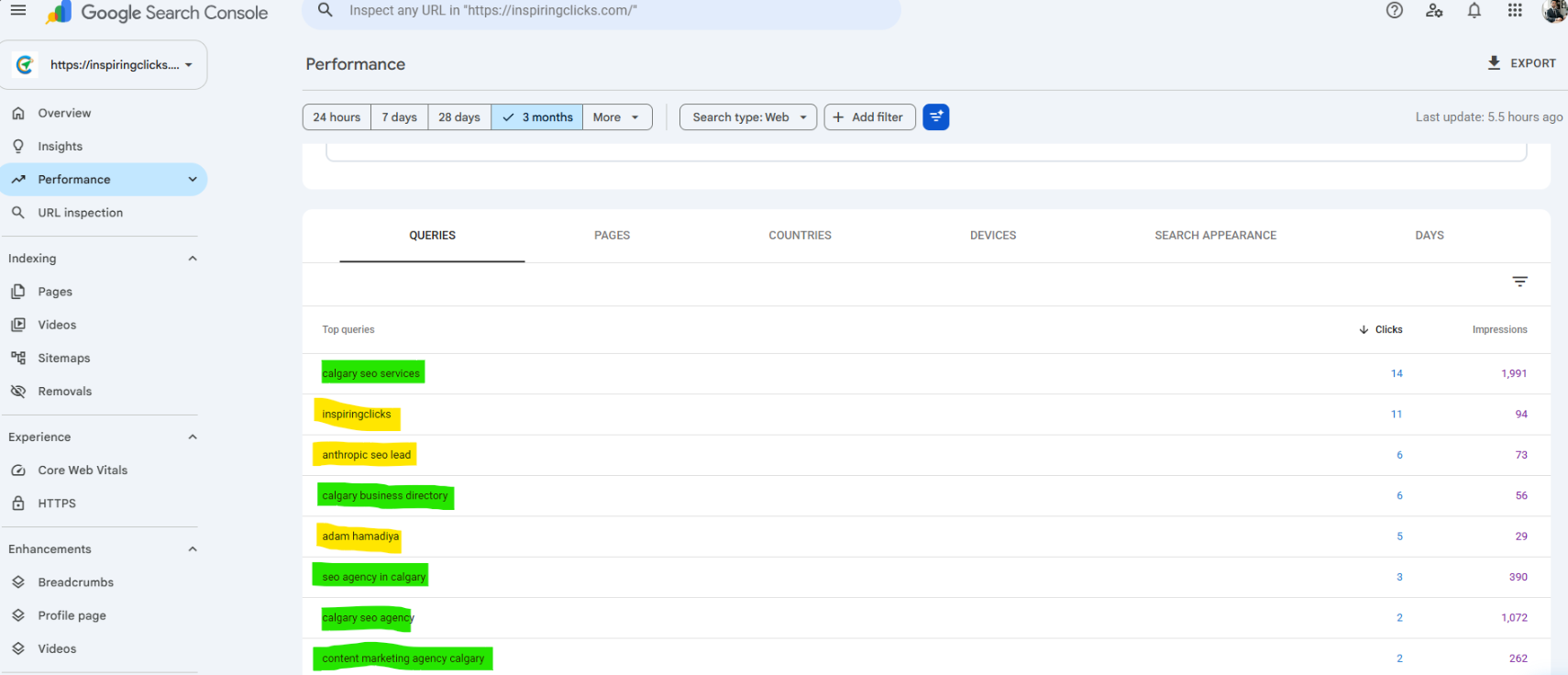
The split between the two is the deferred click showing up in the data.
Scroll to see all columns
| Query type | Impressions | Clicks | Click-through rate |
|---|---|---|---|
| Service searches | 3,771 | 27 | 0.7% |
| Branded searches | 123 | 16 | 13.0% |
Branded searches produced just 3% of the impressions and 37% of the clicks. Someone searching the company name was 18 times more likely to visit than someone searching a service term.
Read on its own, the service row looks like it has taken a hit because of zero-click searches: nearly 3,800 impressions and 27 visits. Read alongside the branded row, those same zero-click searches turn out to be doing something better for online visibility. Nobody searches a company name they have never encountered, and the place they encountered it is the 3,771 impressions sitting directly above.
The human side of a deferred click
It makes sense that branded searches have increased as a result of zero-click results, because while the way people gather information has changed, the need to verify true and credible sources has not.
Long before AI, writers verified their information by drawing from multiple sources. If several sources reached the same or similar conclusion, it was considered trustworthy and used as a reference. People did this by clicking through to each source and reading the article to find what they needed.
Then came featured snippets, which lifted the answer out of the page and placed it directly on the results page, so verification could begin before anyone clicked. Now there are large language models, which go further and compress several sources into a single answer at the top of the results in the form of AI Overviews.
For the most part, people do not gather information for no reason. They do it to proceed with an intention or an action. This makes a zero-click result the first part of a process that ultimately leads to a click, in another place or at another time.
People still need to verify information across different sources. They simply do it in an Overview now, for quick verification, and then enter a website as a result of it.
Which is why zero-click rates overstate the loss when they become deferred clicks. In this case, the click was not prevented, it was postponed, and it returned through a brand query as a result of a service query, which sets the stage for the relationship between SEO and branding.
The reverse is also true, and it is the part worth paying attention to. A business with no brand recognition gets the zero-click impression and never gets the deferred click, because nobody searches a name they do not know. For that business, the impression really is lost. Zero-click search does not hurt everyone equally, it hurts businesses that have not built a brand worth searching for.
What is branded search?
A branded search is a search that contains the business name or a close variation of it. Someone typing the company name, the founder’s name, or a product name unique to the business is not looking for a category, they are looking for a specific brand they already know.
This is different from SEO branding, and the two should not be confused. SEO branding is the practice of building the brand through search. Branded search is one of the results of that practice, and it is the clearest evidence that the work is landing, because nobody searches for a name they have never encountered.
It is also the measure worth watching. The Search Console data above shows exactly that: service searches doing the work of getting found, and branded searches showing that the work registered.
What is SEO branding?
SEO branding is the practice of running search engine optimization and brand building as an integrated strategy, so that the work of getting found also builds on the unique, differentiating qualities of the business.
This matters because shaping a unique identity and public perception plays a crucial role in getting people to choose a brand over its competitors, so even when SEO is done correctly and brings in the click, people will choose the business they trust, and building that trust is a function of branding.
Think of SEO as building trust with search engines, and branding as building trust with people. Since people use search engines, SEO branding is where the two meet.
SEO and branding support each other from both directions:
- SEO builds the brand. Whatever a website ranks for is what the market comes to associate it with, and the key to SEO is getting search engines to make that association first. SEO is not only a traffic outcome, it is a positioning outcome, because a business has to decide where it wants to be on search engines. Hence the importance of keyword targeting and market research, which is essentially knowing your customers.
- Branding supports SEO. Knowing your customers is also knowing how they search, and search engines and AI systems favour businesses that have shown trust and reliability as a result of interacting with customers.
Are SEO and branding the same thing?
Although SEO and branding work with each other and tend to overlap in successful marketing campaigns, they are not the same. They are two different disciplines that require different skills, different tools, and different training.
This means that branding experts do not always run SEO campaigns, and SEO specialists are not automatically qualified for logo design. The two are best merged when each role is backed by genuine expertise. An SEO specialist can perform many aspects of branding directly, such as telling a story through an about page, but for visual identity and logo design, a branding professional is the right hire.
On a more fundamental level, branding is the process of building what people recognize and associate with a business: the name, the services, the core competencies, and the reputation. A website is the primary location and face of a brand in the digital world. To recognize a brand, it must first be found. SEO is therefore the process of making a brand’s website findable and chosen when people use search engines.
- 98% of consumers research a brand or product before making a purchase. Much of what makes a brand therefore happens outside the business itself, in the domain of public perception.
- 66% of them use a search engine to research that brand, which makes visibility on search engines crucial in shaping public perception.
SEO is about getting found, and it puts the “awareness” in “brand awareness.” A brand is what gets found.
Put another way, branding is the face of the website and SEO is the findability of that website. One heavily influences what a visitor encounters. The other influences whether there is a visitor at all. Both overlap, and the best SEO specialists know branding as well.
Why brand building is crucial for SEO
Brand building is crucial for SEO because search engines do not rank websites in isolation; rather, they rank pages supported by a network of external factors such as reviews, mentions, and citations across the web. All of these things form brand perception, and businesses with a strong brand perception are easier to verify in a world increasingly filled with AI-generated content and signals that cannot be trusted at face value.
A brand now directly impacts rankings, and it should be part of the SEO process for three reasons:
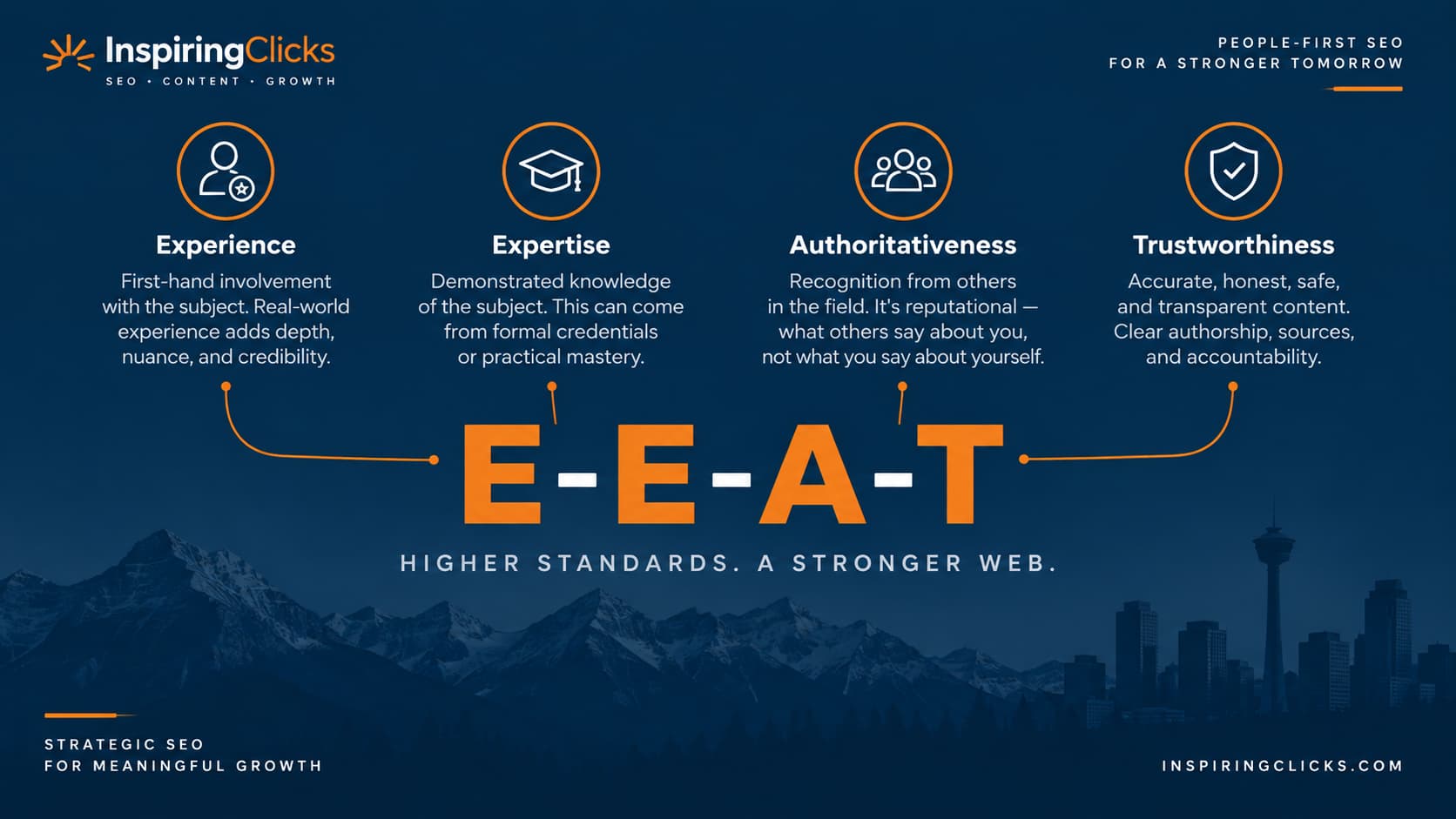
- E-E-A-T. Google’s quality guidelines are built around experience, expertise, authoritativeness, and trustworthiness, and every one of those is expressed through brand signals rather than page content alone.
- AI Overviews. Generative answers are assembled from sources the system considers trustworthy, and trust is established outside the website before it is applied to anything on it.
- External signals. What the SEO industry calls external signals is simply another term for brand perception, measured from the outside.
An entity is a real thing a search engine can identify and store information about: a company, a person, a product, a place. All of these begin outside, in the real world, and make their way into the digital one. A customer writes a review after experiencing the business first hand, and that experience becomes a signal.
Brand perception is shaped by experiences, and Experience is the newest addition to Google’s E-E-A-T quality guidelines. Between them, the internet and Google hold the entire history of a business as an entity.
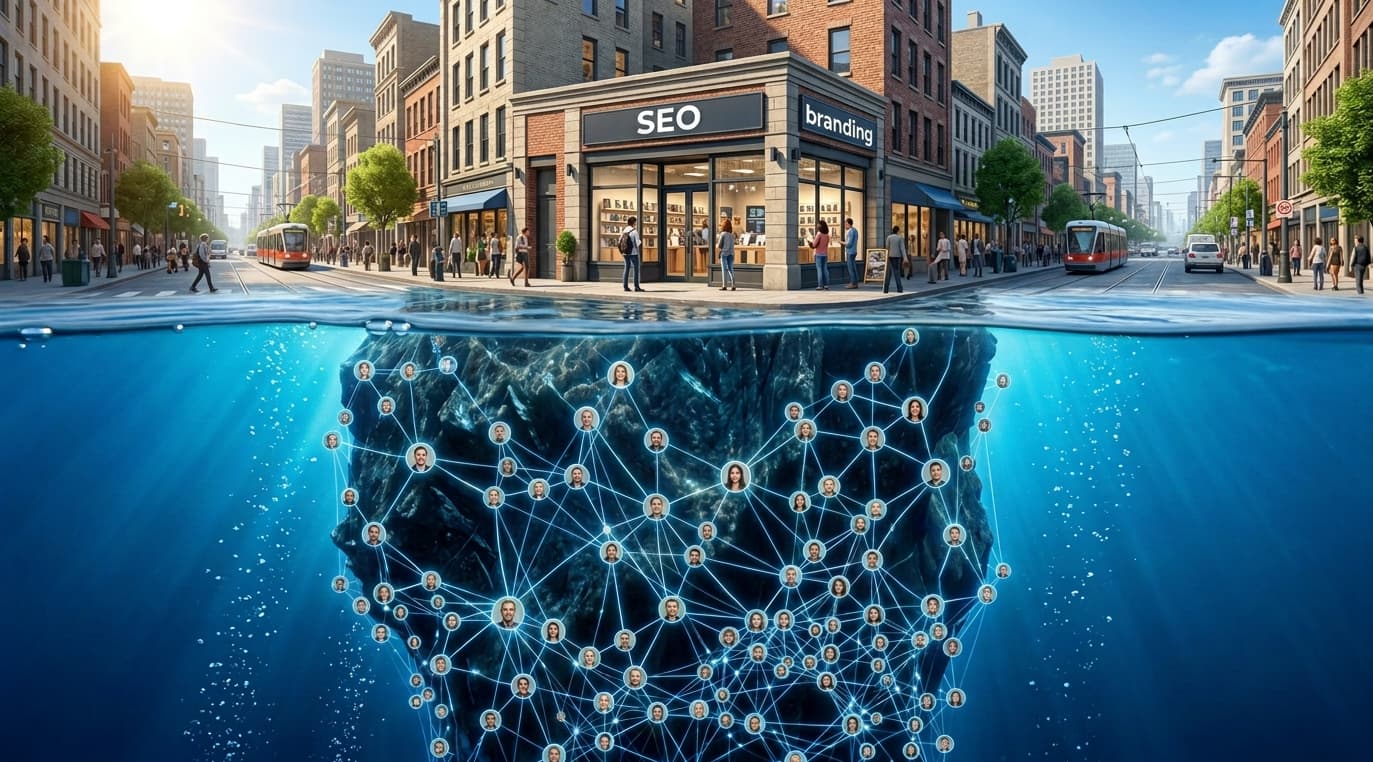
A website doing search engine optimization is not a standalone entity. It is part of a vast network of interactions, references, and impressions that shape brand perception, which is the definition of brand building. Building a brand has therefore become inseparable from SEO, or at least, it should be.
SEO controls where and when a business shows up to solve a problem, while branding dictates how people feel when they see it. Together they execute the same three functions through different channels.
Scroll to see all columns
| Function | How SEO does it | How branding does it |
|---|---|---|
| Shapes customer perception | Captures search intent at the exact moment of need. Ranking for specific search terms frames the business as an authority before a sale is ever pitched. | Uses messaging, visual identity, and core values to establish emotional connection. 68% of consumers say a brand story influences their purchasing decisions. |
| Builds a unique identity | Creates a digital footprint in the form of unique content, through copywriting and content writing that influences the perception people form when they visit the website. | Creating recognizable names, logos, design, voice, values, and a distinct market position. |
| Manages reputation | Secures control over page one results using optimized pages backed by active profiles that put a face behind the website, so the business owns a narrative that third parties would otherwise shape. | Cultivates trust, social proof, and loyalty over time through the real experiences of others, creating a buffer of goodwill that helps the business weather bad reviews or a public misstep. |
How to use SEO to build your brand
Decide what products or services the business should rank for, then build SEO campaigns that target exactly that. On the branding side, decide the qualities the business should be known for — the expertise, the standards, the way it treats customers — then reflect those qualities within the content that accompanies the SEO strategy.
-
Define what you want to be known for
Name the services, the market, and the specific expertise the business should own. Decide who the business is for, and just as importantly, who it is not for. This is a branding decision, and it has to be made before any keyword research begins, because the keywords are the expression of it rather than the source of it.
-
Map that positioning to real search demand
Find the terms people actually use when they need what the business does. Where the positioning and the demand overlap is where the campaign belongs. Where they do not overlap, either the positioning needs sharpening or the demand needs creating through content.
-
Build the pages that express it
Every page should reinforce the same identity rather than chasing unrelated traffic. Ranking for terms that have nothing to do with the positioning brings visitors who will not convert and teaches search engines the wrong thing about the business.
-
Make the brand signals readable
Consistent name, address, and phone details, organization schema, author attribution, and genuine reviews all tell search engines the business is a real entity rather than a website. These are branding assets doing SEO work.
-
Confirm AI systems can reach it
A brand that ranks on Google can still be absent from AI answers, because different crawlers operate under different rules. The usual causes are a robots.txt file that blocks AI crawlers, a firewall that challenges them, or content assembled by script that they cannot read. This is covered in detail in the InspiringClicks article on generative engine optimization.
How to see your brand in Google Search Console tonight
Open Google Search Console, click Performance in the left-hand menu, and scroll down to the Queries tab. Every term listed there is something Google associates with the business.
That list is the practical answer to what your brand currently means to a search engine. It is not what you say you do, and it is not what your homepage claims. It is what Google has concluded, based on what it has read and who has engaged with it.
Read alongside it are the measures that show the brand becoming visible. Most of these live in the Performance report. Indexed pages are the exception, and they sit under Indexing, then Pages.
Scroll to see all columns
| What to look at | Where to find it | What it tells you about the brand |
|---|---|---|
| Indexed pages | Indexing → Pages | How much of the brand exists in Google’s database at all |
| Impressions | Performance | How often the brand is being seen on a results page |
| Clicks | Performance | How often people choose the brand once they have seen it |
| Average position | Performance | Where the brand sits when it appears, and whether that is improving |
| Click-through rate | Performance | Whether the title and description are compelling enough to be chosen |
| Queries | Performance → Queries | What Google currently believes the brand is about |
Which gives SEO two jobs rather than one: building the brand into what it should be known for, and getting it found for exactly that, so the brand produces enquiries rather than only recognition.
Is your brand being hurt by zero-click results, or strong enough to benefit from them?
InspiringClicks SEO services create a brand narrative before any keyword is chosen, so the terms your business ranks for are strengthened by the story you want told.
Request a strategy call below and discuss your goals with a professional who cares about your online success.